Friday, December 3, 2010
Quarry Quagmire, Part 2: New Hope Crushed Stone causing 'major problems' for homeowners and environment, says Solebury
By Charlie Sahner

The trout have died in Primrose Creek.
The creek originates near Solebury Village, and meets the Delaware River at Phillips Mill, a hamlet steeped in local art history and the site of a Colonial-era mill powered by the creek. The waterway is important not only due to its historical and artistic value but also because it sustains local flora and fauna. Virtually every home in the area depends on the creek as a water source, as do wetlands, fish, birds, and plants.
Two years ago, New Hope Crushed Stone and Lime submitted a request to the Pennsylvania Department of Environmental Protection (PADEP) to excavate an additional 50 feet deeper at their quarry at the corner of River and Phillips Mill roads.
At that time, the growing number of lost wells, sink holes, and dry sections of Primrose Creek galvanized Solebury residents, officials, and environmental groups to speak up in opposition to the request, which is still pending before the PADEP.
"The mining activities of New Hope Crushed Stone have resulted in decreased ground water elevations and altered flow patterns throughout much of the Primrose Creek watershed and beyond its boundaries," said the township. "Consequently, many residents have had to lower their well pumps, deepen their wells, or replace their wells."
Solebury Township went on to say that "removing the Primrose Creek stream channel on the quarry property and pumping ground water down to greater than 100 feet below sea level in the quarry pit has caused many major problems for home and property owners in the area" including damage to "potable supply wells" along with "land erosion, impacted fish community and aquatic ecology, damaged wetlands and water pollution."
Other area environmental groups like the Primrose Creek Watershed Association, Bucks County Trout Unlimited, the Delaware Riverkeeper, the Delaware River Basin Commission, and the Aquetong, Paunacussing and Pidcock Creek watershed associations, are also concerned about damage from the quarry.
Kevin Morrissey, head of the Primrose Creek Watershed Association, explained that there has been a significant amount of analysis performed by Solebury Township consultants and the PADEP Aquatic Biology Unit in Norristown in recent years. "These studies have concluded that the quarry is taking more than their fair share of water resources," he said. "The experts have determined that this is an unsustainable condition that will continue to get worse.
"Some individuals have expressed the opinion that the mining interests in this state will overshadow other higher priority concerns such as the right of residents to have a safe and healthy environment for themselves and their children," added Morrissey.
"Our Association believes that the strong support shown by Chuck McIlhinney (R-Bucks and Mongomery) and Bernie O’Neill (R-Bucks) for our efforts will communicate to the DEP Secretary and others in Harrisburg that the security of Pennsylvania residents takes precedence over an aging quarry," he continued.
Operations began in the quarry in the 1940s, and groundwater withdrawals began to increase in order to keep the quarry pit dry. In 1998, say environmentalists and Solebury Township, the Primrose Creek stream channel was removed on the quarry property with PADEP knowledge.
Ironically, in May 2009 a PADEP Aquatic Biology Unit study concurred with Solebury Township’s own study, detailing quarry effects like dewatering, sedimentation and erosion. One year later, the PADEP placed the Primrose Creek on the endangered list.
Environmental groups say they're concerned by the quarry's estimated average water consumption of three million gallons per day, which they believe is drawn from the Primrose and Aquetong watersheds and is ultimately expelled along with sediment into the Delaware River.
Said a Solebury resident living about one mile from the quarry, "Our well hasn't been affected yet, but our windows rattle with each blast on Wednesday mornings, our lawn is beginning to show waves and swells, and tree roots are suddenly being exposed."
Mining is big business in Pennsylvania, and while the Norristown office of the PADEP has confirmed that environmental damage has been caused by New Hope Crushed Stone, the department's Pottsville "Mining" office seems to enjoy a somewhat cozy relationship with the industry. In fact, mining has been designated by the PADEP as an "Industry of the Future", and "is important to Pennsylvania's economy and the needs and interests of PA's mining industry intersect significantly with the visions and roadmaps the mining industry developed with the Department of Energy’s Office of Industrial Technologies."
According to the U.S. Geological survey, Pennsylvania produces about $2 billion worth of coal annually, and nonfuel mineral production, including crushed stone and lime, accounts for more than $1 billion in annual production in the state.
So, after two years of weighing the quarry's request to dig even deeper, where does the PADEP now stand on the documented damage to the Primrose Creek and nearby wells, the formation of sink holes, and killing of local wildlife, and what are the department's planned next steps and overall position on the quarry and its continuing activities?
Says a PADEP spokesperson in a statement, "In touching base with our Watershed Management and Mining staff, I confirmed that we are still reviewing all the information and are discussing the matter with Solebury School officials and the quarry operator. Our mining folks advise that there have been no recent water losses noted."
The Solebury School?
Officials at the Solebury School acknowledged discussions with PADEP but declined any further comment. The prestigious private school is situated in close proximity to the quarry and neighbors say sink holes have appeared on its grounds.
And while Solebury Township may have once been in the vanguard of the fight for protection of its residents and land, including undertaking studies, legal action, and publicizing environmental concerns extensively on its Web site, the township now seems to be backing away from its prior commitment to resolving the overall quarry issue rapidly, say local environmentalists and political observers.
Some speculate that the results of last year's Board of Supervisors election may have tipped the balance of that group's composition in a manner detrimental to environmental concerns. Others familiar with the situation speculate that Solebury's budget is coming under pressure, and the township is now placing a higher priority on land development and growth of its tax base, as evidenced by the recent proposal for expanded commercial development near Logan Square.
Top Solebury officials did not respond to requests to be interviewed for this article.
Unfortunately, a geographic fault line connects the Aquetong Watershed to the quarry in question, say area conservationists. And that means New Hope and its water supply may be imperiled next as the PADEP lets its decision making process drag on.
As author Norman Maclean once said, "Eventually all things merge into one and a river runs through it."
Meanwhile, the trout are gone from what's left of Primrose Creek, its silty water flowing inexorably toward the Delaware River.

Thursday, November 25, 2010
Quarry Quagmire: Fast, loud trucks are tip of iceberg say area groups, public officials

By Charlie Sahner
As previously reported, complaints persist of noisy, high-speed dump trucks and vans crossing over double yellow lines into opposite lanes, bumping or climbing curbs, bounding at high speed over quaint country bridges, and making loud, abrupt stops and turns along Route 32, or "River Road", as it is called in New Hope and surrounding areas.
One challenge is that while the drive leading from New Hope is considered one of the most beautiful in the country, the width of the highway also varies tremendously, often narrowing to almost a single lane in some sections, as it winds through historic towns and over aging bridges to the north and south. Additionally, driving on River Road through New Hope for some truckers is a way to avoid paying the toll at the Route 202 bridge crossing the Delaware River back to New Jersey.
Complicating the situation, River Road becomes Main Street in New Hope, and the same highway is suddenly shared with metered parking spaces, sidewalks crowded with visitors, and aging roadbeds and bridges.
Said State Representative Bernie O’Neill (R-Bucks), "My wife and I recently had dinner outside at the Logan Inn and counted the number of trucks going by -- there were a lot more than you'd expect."
Representative O'Neill, along with State Senator Charles "Chuck" McIlhinney (R-Bucks and Montgomery) and others, have been instrumental in helping the New Hope Residents Association implement a weight limit on the Rabbit Run Bridge and reduce speed limits from 35 miles per hour to 25 at the northern and southern edges of the borough on Route 32.
Jim and Kathy Lyons of New Hope formed the group a few years ago to generate awareness about the noise, excessive speed and shear amount of trucks coming through the borough daily, many of them originating from the New Hope Crushed Stone quarry several miles north at River and Phillips Mill roads, they say.
The group first surveyed the number of trucks coming through New Hope daily on their way to and from the quarry, and produced a petition signed by over 400 residents protesting the amount of quarry truck traffic, speeding, and noise. The association then presented the petition and supporting information at New Hope Borough Council meetings, and met with successive local law enforcement administrations. "New Hope Borough Council gave us great support," says Jim Lyons.
But, still, the flow of loud, dusty, fast-moving trucks runs unabated to this day.
While localities like New Hope and Solebury are limited under state law from using radar-based speed detection equipment, Solebury Police have run unannounced joint truck checkpoints with State Police and seen some success, although communication between trucks drivers can be rapid in these situations, say those familiar with the industry.
And some municipalities in Pennsylvania have successfully moved to limit "Jake braking", or the use of compression release engine brakes by trucks, because they can produce an exceptionally loud, stacatto noise not unlike that of an amplified machine gun.
Nearby Lambertville has succeeded in virtually banning gravel trucks from its riverside road, Route 29, but only after a tragic accident there.
State Senator Chuck McIlhinney (R-Bucks and Montgomery) pulled no punches in saying he doesn't want that to happen on this side of the river.
"I've long been an advocate of moving trucks off of local roads," he said.
"River Road should be a scenic road and not a road used to avoid tolls by trucking companies. These trucks are putting wear and tear on roads and bridges never meant for it," he added.
Perhaps even more ominous is what officials in Solebury Township have been saying about "the environmental impacts of New Hope Crushed Stone quarry".
"The mining activities of New Hope Crushed Stone have resulted in decreased ground water elevations and altered flow patterns throughout much of the Primrose Creek watershed and beyond its boundaries. Consequently, many residents have had to lower their well pumps, deepen their wells, or replace their wells," says the township.
Other area grassroots organizations and environmental groups like the Primrose Creek Watershed Association, Bucks County Trout Unlimited, the Delaware Riverkeeper, the Delaware River Basin Commission, and the Aquetong, Paunacussing and Pidcock Creek watershed associations, are monitoring the situation.
Public information provided by Solebury Township indicates that "removing the Primrose Creek stream channel on the quarry property and pumping ground water down to greater than 100 feet below sea level in the quarry pit has caused many major problems for home and property owners in the area" including damage to "potable supply wells" along with "land erosion, impacted fish community and aquatic ecology (trout, once numerous in the Primrose Creek, are no longer present), damaged wetlands and water pollution."
It gets worse: "A scientifically-based sampling and review of the Primrose Watershed characteristics in comparison to very similar areas in Aquetong Watershed is needed to ensure PADEP will regulate the quarry in a manner that does not impact the quality of life of the residents, as well as preserve and protect our natural resources."
Translation: Our neighbors to the south should keep one eye on their water supply and the other on the State Department of Environmental Protection because New Hope's next.
Says Lyons, "The situation at the New Hope Crushed Stone quarry is an environmental accident waiting to happen, if it has not already begun. The deeper the quarry is allowed to blast down, the void that it creates must be displaced with ground water due to the huge depth.
"The PA Department of Environmental Protection has allowed the quarry to continue. Where is this water coming from? Where are three million gallons of water a day going? The question really is: 'Department of Environmental Protection' --what 'protection'?” he continued.
Friday, November 19, 2010
Thursday, November 11, 2010
New Hope Police extend Prescription Drug Take-Back program
 |
| New Hope, PA Borough Hall (photo: Charlie Sahner) |
By Charlie Sahner
The New Hope Police Department will offer another chance for the public to dispose of unused and/or expired prescription drugs this Saturday from 10-2 in the lobby of Borough Hall, located in the former St. Martin of Tours Church at the corner of New and West Mechanic streets.
Experts say that prescription medicines have become an expanding area of drug abuse, with pain killers like Oxycontin leading the way. And, obviously, many commonly prescribed drugs can be hazardous to children who may find them, often having been forgotten and left in the back of a bathroom medicine cabinet.
So, why not simply flush those unused meds right down the toilet?
Bad move; those same experts say chemicals like hormones and antibiotics are winding up in increasing amounts in our water. By contrast, the Prescription Drug Take-Back program utilizes environmentally-responsible methods of drug disposal.
Police stress that participation in the program is completely anonymous. Citizens concerned with privacy can remove identifying labels from bottles, or simply dump the contents into the disposal container provided and take the bottle back.
Said New Hope Police Chief Mike Cummings, "For many kids today, their first drug experience comes from prescriptions left by parents in the home medicine cabinet. This Prescription Drug Take-Back event is a great way to protect kids and the environment."
Friday, November 5, 2010
Group Formed to Save Bucks County Playhouse in New Hope PA
 |
| Bucks County Playhouse in New Hope, PA |
By Charlie Sahner
A group of concerned citizens and civic leaders has been formed and held meetings with additional parties in an attempt to secure ownership of the Bucks County Playhouse and ensure that it remains an artistic asset to the community, according to several individuals familiar with the situation who asked to remain anonymous due to the sensitivity of the negotiations.
Ralph A. Miller, owner of New Hope's famed Bucks County Playhouse, is having apparent difficulty making debt payments, and barring any last minute financial or legal efforts, the theater will be auctioned off at a sheriff sale in Doylestown on Nov. 12, confirmed county officials and court records.
Sources say that a last-minute payment or related action by the owner would not be unexpected.
Miller has been running the theater since 1977, and owes the Stonebridge Bank of Skippack more than $2 million, documents reveal. Neither Miller, his lawyer nor any official of Stonebridge Bank or its parent company would return phone calls requesting information.
Borough officials have also not yet responded to requests for information.
Sheriff sales are much like regular foreclosure auctions, but are presided over by a sheriff due to a state requirement.
Miller was personally served with a notice of the sale on Aug. 25 of this year, a sheriff's hand bill was posted on Sept. 28, and the final affidavit attesting to the notice of sale was filed Oct. 27, according to court records.
Speaking of the upcoming sale, Mechanic Street Mugs owner and business leader Joel Roberts commented, "The Playhouse has a history going back to the Canal House days associating it with Mechanic Street and its businesses. We look forward to whatever future the playhouse has and will continue to work hand in hand with them to improve the creative environment of this artistic neighborhood."
The Bucks County Playhouse, centrally located at 70 S. Main St., quickly became known as a pre-Broadway theater venue following its 1939 opening, with shows like Barefoot in the Park and Harvey premiering there.
The roll call of actors appearing in Playhouse productions is myriad, as are stories of the rumored off-stage antics of some at local bars, restaurants and gatherings. Playhouse actors have included Robert Redford, Grace Kelly, Helen Hayes, Kim Hunter, Shirley Booth, Paul Lynde, Gale Gordon, Roddy McDowell, Walter Matthau, Merv Griffen and Larry Hagman.
Monday, November 1, 2010
High Heel Drag Race on Mechanic Street in New Hope 2010
By Charlie Sahner
New Hope's West Mechanic Street was packed Sunday night with Halloween revelers and spectators of the borough's Annual High Heel Drag Race.
Contestants had to race uphill to the top of the block near the canal, then back down the street. The event, sponsored by TearDrop Memories, required that participants wear high heels and carry antique bird cages while running.
Prizes were provided by local merchants, who were quite generous this year.
The legal drag race was immediately followed by a parade of zombies sponsored by Delia's Makeup and Theatrical Supplies.
The whole affair was creepy beyond belief, and the crowd ate it up, so to speak.
Only in New Hope!
Sunday, October 24, 2010


Friday, October 15, 2010
New Hope / Solbury School Administrators Keep Sending Buses Over Deteriorating Ferry Street Bridge
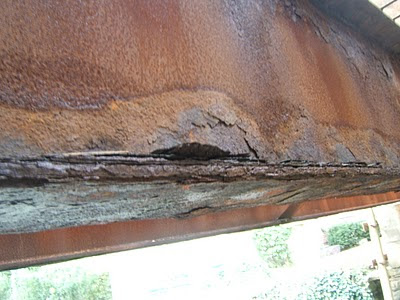
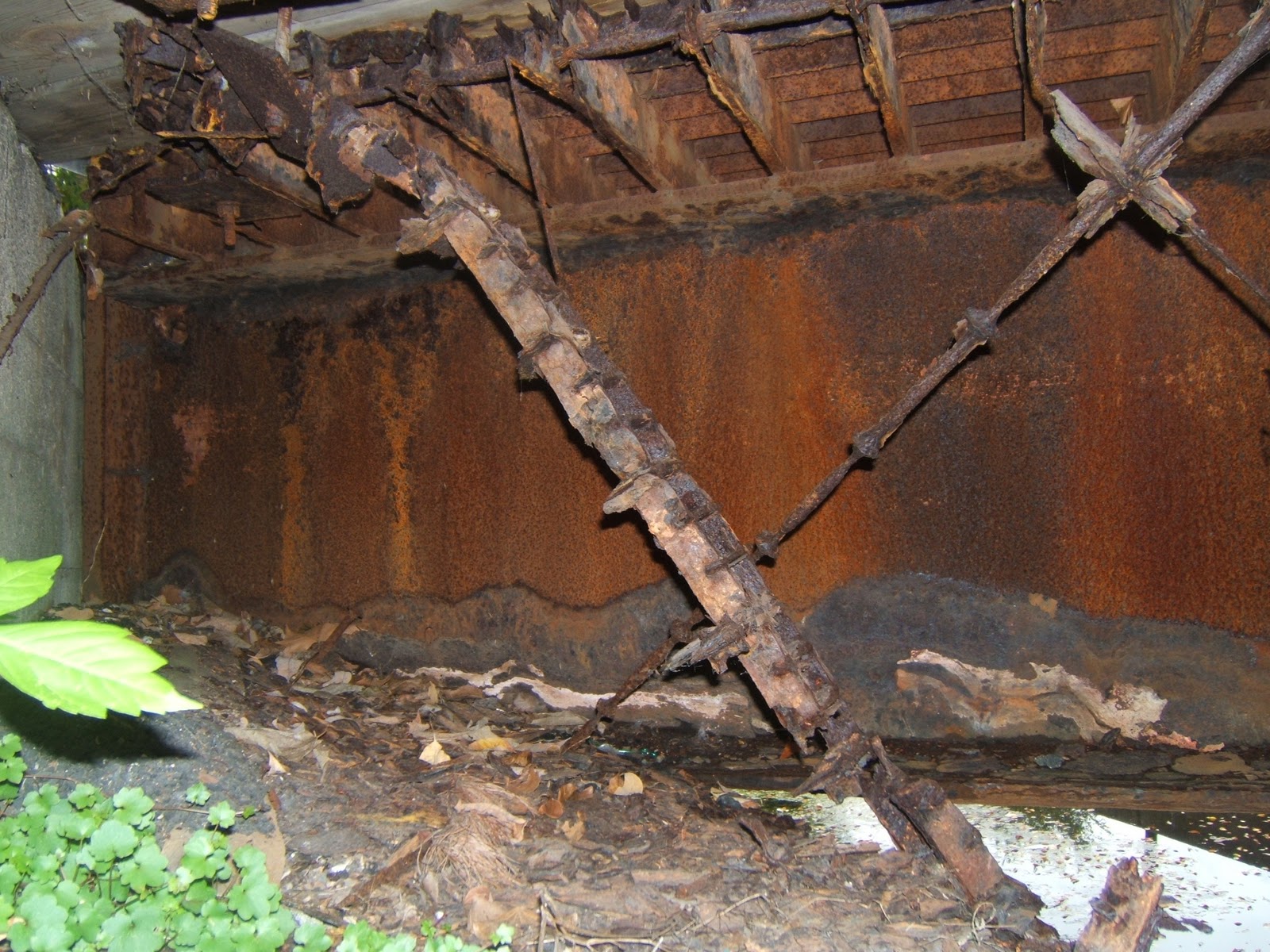
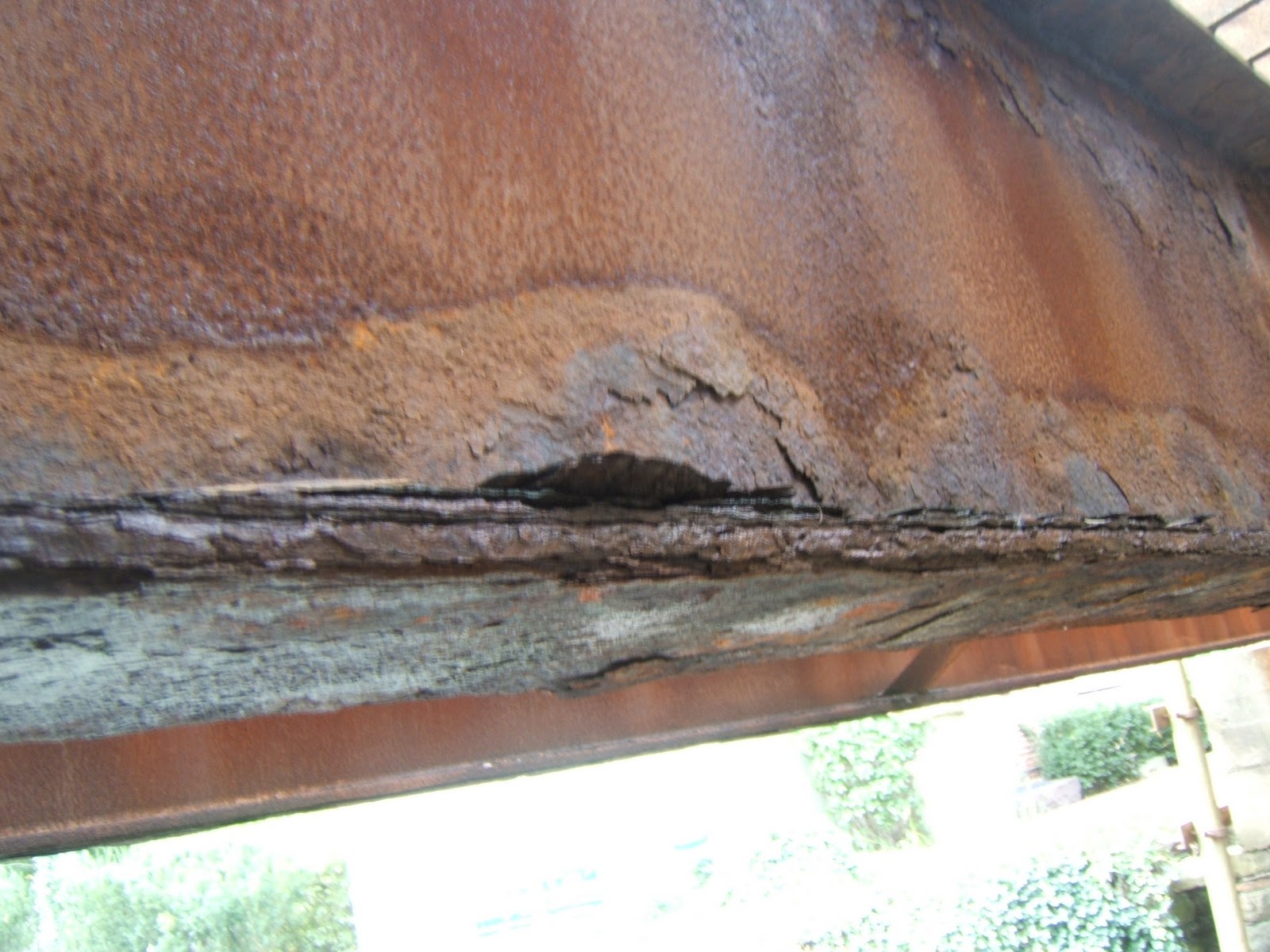
Look at the pictures, and decide for yourself if you want the New Hope-Solebury or Solebury School student in your family bussed over a bridge the state Department of Conservation and Natural Resources says is "deteriorating" and in such "poor condition" that it needs to be completely replaced, but keeps at the same posted weight limit as when built 50 years ago -- 20 tons.
Two parallel roads, feet away, would cost no extra time or money to use, and provide a safe detour until work by the DCNR starts next year. David Hansel, Director of Operations for NH-S Schools, determines which streets buses travel upon, and could change the route with a snap of his fingers, but won't. His phone number 215-862-8183.
If the pictures concern you, ask the school administration if they visited the bridge and and can guarantee it's safe for your kids. Superintendent Ray Bocutti's phone is 215-862-5372 ext. 6226, if you want to go to the top and he's not traveling.
If you can, go take a look for yourself. The open sidewalk isn't even safe anymore.
The engineers seem gagged, the State won't respond to the photos below, and the NH-S Administration has expressed no concern or interest so far over the level of risk to our children.
Decide for yourself.
Me? I'm driving my kid to school for now.

Two parallel roads, feet away, would cost no extra time or money to use, and provide a safe detour until work by the DCNR starts next year. David Hansel, Director of Operations for NH-S Schools, determines which streets buses travel upon, and could change the route with a snap of his fingers, but won't. His phone number 215-862-8183.
If the pictures concern you, ask the school administration if they visited the bridge and and can guarantee it's safe for your kids. Superintendent Ray Bocutti's phone is 215-862-5372 ext. 6226, if you want to go to the top and he's not traveling.
If you can, go take a look for yourself. The open sidewalk isn't even safe anymore.
The engineers seem gagged, the State won't respond to the photos below, and the NH-S Administration has expressed no concern or interest so far over the level of risk to our children.
Decide for yourself.
Me? I'm driving my kid to school for now.
 |
| School bus maneuvers around seemingly stunned and stopped car carrier on Ferry St. bridge in New Hope, PA. |

 |
| One of two completely corroded supports beneath the wheels of the bus. |

 |
| Broken roadbed. The PA DCNR admits the roadbed is "rusting". |

 |
| Support, or lack thereof, under still-open sidewalk. The DCNR didn't know about this when asked. |

 |
| Main supporting beam under school bus pictured above. |

 |
| Another primary supporting beam. |

Friday, October 8, 2010
Does deteriorating Ferry Street Bridge threaten New Hope and Solebury P.A. schoolchildren?
The State Department of Natural Resources and Conservation has decided to begin completely replacing New Hope's Ferry Street Bridge spanning the Delaware Canal in November of next year, and aims to finish sometime the following spring.
But if the bridge is deteriorating and needs to be replaced sooner than later as the DCNR claims, why hasn't the agency lowered the weight limit of 20 tons, established when the structure was in a much newer condition?
Wayne Nguyen, who is coordinating the bridge replacement project for the DCNR, acknowledges that there has been "some section loss" and that the "deterioration is probably on the deck itself." While it's true, he says, that the main "beams of the bridge are rusted, there's not a lot of section loss."
When asked about the apparent corrosion of supports attached to the beams, Nguyen said, "The sidewalk has been closed. We usually inspect every two to three years, but the engineers recommended that we inspect every year."
He said that inspectors from Raudenbush Engineering, Inc. examined the bridge this year and determined that the 20 ton limit was "okay."
When asked if it might be prudent to lower that limit or redirect some traffic, particularly school buses, one block in order to ensure the safety of schoolchildren, Nguyen replied "I'm not sure how much a school bus weighs; unless it weighs more than 20 tons, the bridge should be able to handle it."
In addition to large trucks and tour buses, buses from at least two area schools pass over the Ferry Street Bridge twice a day.
According to WikiAnswers, the "average, 38', 84 passenger school bus weighs in between 11 and 14 Tons (22,000 to 28,000 pounds) curb weight without passengers. When you add 84 passengers, say high school students, that can add up to 14,700 additional pounds in weight, bringing the total up to about 42,700 pounds."
Admittedly, some of the buses using the bridge may weigh less than the average figure quoted, and perhaps the images of a flaking, peeling and corroding bridge depicted above can be explained away by those with an engineering background, unlike this reporter.
But the question remains: are drivers and passengers, especially schoolchildren, being unnecessarily put at risk?
Wednesday, October 6, 2010
Pair of young men clinging to barrel in Delaware River saved by hero kayakers
 |
| Area where duo rescued; clump of trees on R is where 2nd victim clung. (Photo provided by Jeff Vinsosky) |

By Charlie Sahner
Police, fire and rescue vehicles including airboats were called out from New Hope, Solebury, Central Bucks, Lambertville at approximately 2:30 p.m. Sunday as two individuals were reported to be floating downstream on a blue barrel on the Delaware River near Stockton. Police and rescue units took up staggered positions along the Pennsylvania side of the river and on the New Hope-Lambertville free bridge.
Meanwhile, on the raging brown river below, a life and death drama was being played out, according to Jeff Vinosky, 21, of Fairless Hills and Gary Lewis, 21, of Levittown, who say they spotted the barrel while kayaking on the adjacent Delaware and Raritan Canal.
Just as they entered the river near Prallsville Mills to assist the two men they had seen clinging to the barrel for life, one of those in trouble broke away from the improvised float and swam for a nearby strip of land in the river.
The apparent good samaritans said they were able to reach the first victim and guide him ashore to safey, but couldn't fight the roiling, post-flood waters and crosscurrents from a nearby stream to reach the second, who was by then clinging to a tree near the water's edge. They alerted rescue personnel, and an airboat appeared soon thereafter to secure that victim.
According to witnesses, the two individuals in trouble had toppled their canoe upriver. One fan of the Facebook site "New Hope PA" posted Sunday that he had seen two individuals "struggling" in a canoe near the Black Bass Hotel at 1:45 p.m.
Emergency personnel on both sides of the river have been mum on the incident, deferring questions to one another and the New Jersey State Police, who say they have no record of the incident.
This reporter's guess would be that since the two "barrel boys" didn't need transportation to a hospital, and since it's not illegal to canoe or ride in a blue plastic barrel immediately after near-flood level waters on the Delaware, no emergency officials felt like filing a comprehensive incident report on a Sunday afternoon.
Nor, apparently, in giving credit where it was also due.
Let's be clear. The pair of young victims in the river, by all accounts, were exhausted, pale, uncommunicative and generally "shocky," having been immersed in very cold, fast-moving water for more than half an hour. However poor their judgment was in attempting to preamble about on post-flood waters akin to the chocolate river in Willy Wonka studded with fast-moving logs, let's not blame the victims.
But let's celebrate the heroes: Gary Lewis and Jeff Vinosky. These two stuck to the safer canal near Stockton on their afternoon kayak run, but seeing two people clinging for life in the rushing Delaware was enough for them to paddle without thought into harm's way, grabbing one victim and handing him their life vest, and locating and getting help for the second.
These two should receive a public award.
Subscribe to:
Posts (Atom)