Showing posts with label history. Show all posts

Saturday, January 23, 2016

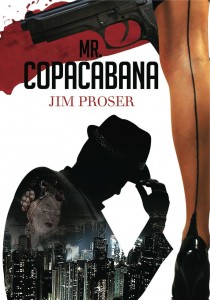
‘Mr. Copacabana’: The story of the genius who created Manhattan’s legendary nightclub and raised a family in Bucks County


bookBy Charlie Sahner

It’s 1969, the year of Apollo 11, Woodstock, and the “Miracle Mets.”

Mr. Copacabana” author Jim Proser is 16 years old. He’s working at Mel’s Restaurant on West Mechanic Street in New Hope, Pennsylvania, having finished a gig as assistant stage manager for Lee Yopp at the Bucks County Playhouse across the street.

Proser is living a block away at the Logan Inn with his father Monte, who created the legendary Copacabana nightclub in New York City, and is now not only separated from his wife, but also incapacitated after being mugged by three teenagers in Trenton. The younger Proser fears for his father’s life – Monte has no overt enemies, but he has more than a few mob members in his social circle.

If it all sounds like the “Godfather” hospital scene where Michael Corleone saves his father’s life, that’s because a big part of the Copacabana story and allure was the ever-present sense of danger, mixed with glamour, romance, music and fortune.

Flash back another 30 years, and a much younger Monte Proser is in the process of making the Zombie cocktail the unexpected hit of the 1939 World’s Fair, and helping usher in the tiki bar trend that would last nearly four decades. In a brilliant marketing stroke, he limits cocktail purchases at his booth to “only one per customer,” and by the time the World’s Fair ends, Monte Proser is sitting on a pile of cash. He decides to open a nightclub.
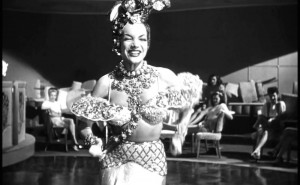
Carmen Miranda.
Carmen Miranda.
The Copacabana opened on Nov. 10, 1940, at 10 E. 60th St. in New York City. It combined the Polynesian themes and exotic rum drinks of tiki/beachcomber culture with Brazilian decor and Latin orchestras. The “Copacabana Girls” of the chorus were adorned in glittering, extravagant costumes, often sporting fruited turbans in the style of Carmen Miranda.

The list of entertainers who launched their careers and shattered attendance records at the club is staggering, including Sammy Davis Jr., Martin and Lewis, Johnnie Ray, Louis Prima, and Frank Sinatra, who referred to Monte Proser as “the genius.”

But while Monte’s name was on the Copacabana lease, organized crime boss Frank Costello had helped finance the nightclub, and was a silent partner.

“He knew full well what he was in for, but he needed the capital,” explained Monte’s son Jim. “He was in debt, committed to the club, and had no illusions about what partnership Frank Costello would mean. Coming out of the Great Depression, organized crime was one of few places where one could turn for money.”
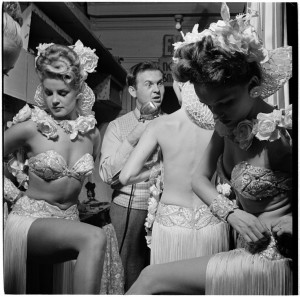
“Backstage at the Copa” (Photo by Stanley Kubrick for Life Magazine, 1948).

Costello hired former Kit Kat Club manager Jules Podell to run the kitchen and restaurant staff at the Copacabana, and keep an eye on his stake in the business. Podell quickly earned a reputation as a violent, volatile and cruel dictator, skimming from suppliers, punching wait staff, and perpetually feuding with Monte over control of the club.

Podell even assaulted Johnnie Ray once at the Copacabana, hospitalizing the famed singer.
“He hated the song ‘Cry’ and Ray’s voice, and the way the women would scream for him,” according to Jim Proser. “Podell grabbed Ray, and locked him in a walk-in freezer for six hours. Johnnie Ray came down with pneumonia, and had to cancel his tour.”
It’s easy to see how the refined, intelligent British-born Monte would clash with the truculent Podell, but the two had more in common than met the eye.

“They were exactly matched as protagonist and antagonist,” observed Jim Proser. “Both were Jewish bar brawlers, with the same build and look, and both had volcanic tempers. Monte would take a swing at anyone who said something egregious, particularly about his religion or wife.”
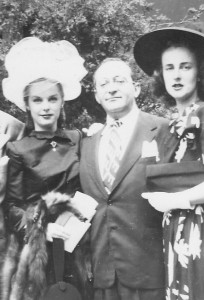
Jane, Monte and Jane's sister Evelyn during the couple’s wedding reception at the Logan Inn in 1945.
Jane, Monte and Jane’s sister Evelyn

Monte met his wife, the talented and stunning Jane Ball, while she was auditioning to be a Copacabana Girl, and announced his intention to marry her on the spot. She made him wait three years.
Raised as an Irish Catholic in Kingston, New York, Ball valued Monte’s authenticity and strong character. A talented dancer and actress with movie offers already in hand, Ball couldn’t have imagined the toll her husband’s rivalry with Podell would take on their marriage, along with Monte’s burgeoning alcohol consumption and frequent visits to a nearby horse track.

Monte and Jane were wed in 1945 at Justice of the Peace Don DeLacey’s barbershop in New Hope. The couple walked to their wedding reception down the street at the Logan Inn.
From there, the two honeymooned at a home Monte had purchased on Jericho Mountain near Bowman’s Tower in New Hope, and went on to raise their five sons in Bucks County.

“Unfortunately, the movie studios were pumping out amphetamines, and my mother got hooked, later self-medicating with barbiturates,” recalls Jim Proser.

“Some of my earliest memories are of my mom being drugged and unresponsive,” he continued. “She would get the pills from a pharmacist in Yardley.”

Meanwhile, Monte was muscled out of the Copacabana, but given jobs promoting and managing shows in Las Vegas during the 1950s. “Frank Costello was a standup guy,” remarked Jim Proser. “He knew he had hurt Monte, and made sure Monte had a job.”

“Income was erratic, and there was shame and isolation on Jericho Mountain for my mom,” Jim recounts. “But mom and dad never fought openly. He felt guilty that she was depressed, and she knew there was nothing he could do about it, so there was a kind of despair they shared without blaming each other. “
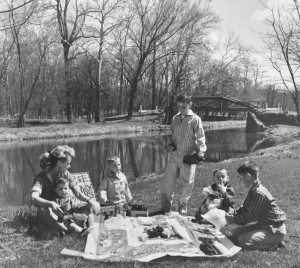
Jane and sons (from left) Timmy, Jimmy, Chip, Mike and Billy in an advertisement on the New Hope Canal promoting local New Hope merchants in 1956.
Jane and sons (from left) Timmy, Jimmy, Chip, Mike and Billy in an advertisement on the Delaware Canal promoting local New Hope merchants in 1956.
Although they separated for a while, the couple eventually reunited at their mountain home. Monte was asked to run his “last saloon” at La Bonne Auberge restaurant in New Hope in the late 1960s, and worked there until he died from a heart attack at his home in 1973.

Meanwhile, his son Jim had grown up around Newtown, Pennsylvania, and on the streets of New Hope. He started writing for the Lambertville Beacon, and in New Hope had been a busboy and dishwasher at Mel’s, the Hacienda, and Johnny Francis’ Canal House.

Jane moved to West Bridge Street in New Hope, and worked as a registered nurse until she died in 2005.

“Although I’m a screenwriter and playwright, I consider myself essentially a journalist,” said Jim. “A book about Dean Martin published in 1998 referred to Monte as a “front man” for the mafia, and so I wanted to set the record straight. I wanted to tell my father’s story, wherever it led.”
And the moral of the story?

“Be careful who you pick for friends and hang around. I don’t think that Monte had a choice.”
A musical stage version of “Mr. Copacabana” is being developed at the Key West Theater, and Proser hopes to premier the play at Bucks County Playhouse. A TV adaptation of “Mr. Copacabana” is also in the works.

Mr. Copacabana” is a spellbinding tale of the nightclub era in American society, and of fame and fortune in New York City and New Hope. It’s also a morality play of sorts involving a deal with the devil, Frank Costello.

Perhaps, at its core, “Mr. Copacabana” is a romantic story about Monte’s obsession with a fading dream, and the love between he and his wife that somehow prevailed through it all.

“Mr. Copacabana: An American History by Night”
By Jim Proser
Publisher: CreateSpace
Paperback: 536 pages

Tuesday, June 17, 2014

New Hope Borough Council president risks appearance of conflict of interest by not recusing herself from review of project next door

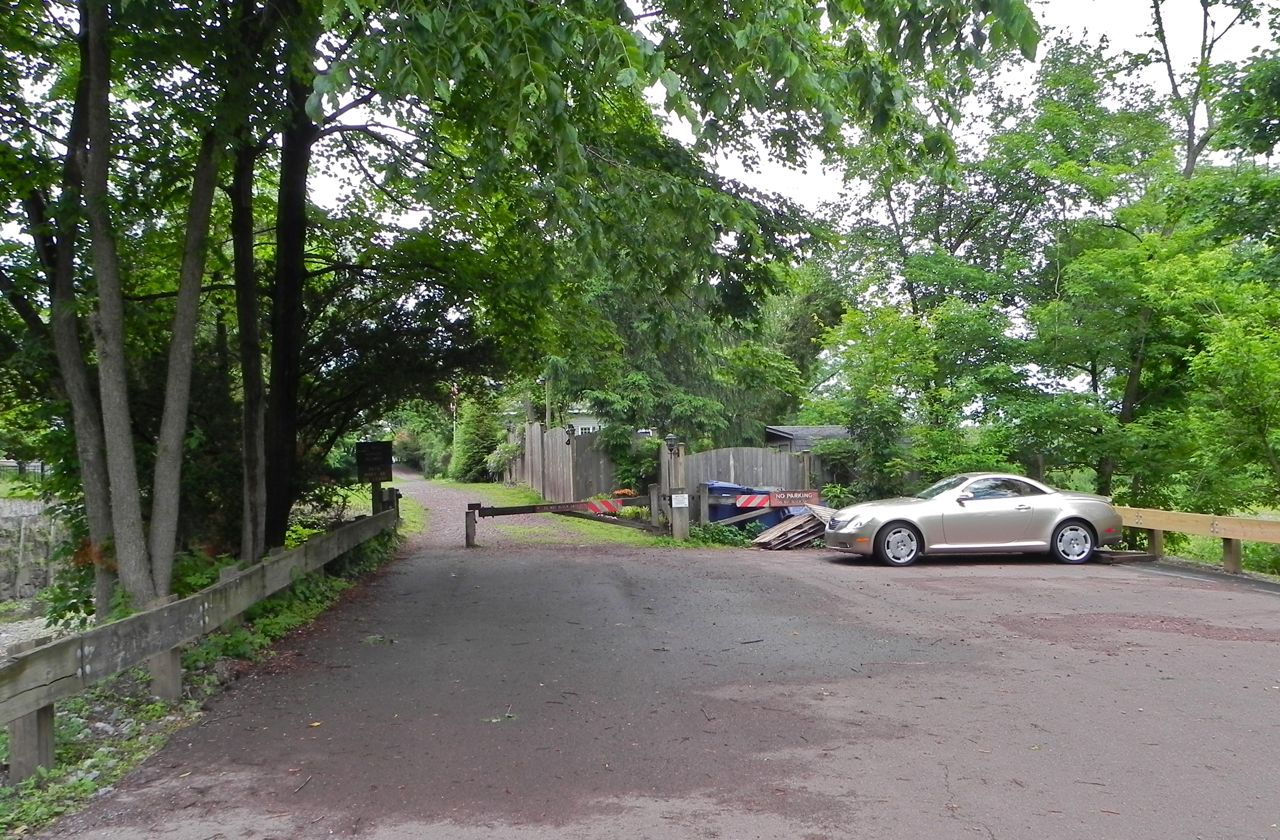
Proposed project site (foreground) and Dr. Shaw's property (background)
Proposed project site (foreground) and Claire Shaw’s property (background, fenced)

New Hope Borough Council President Claire Shaw would be well-advised to create some distance between herself and the borough’s review of the proposed four-story boutique conference center that investors want to build next to her property to avoid the appearance of a conflict of interest, say ethical experts.

Shaw disagrees: “I have no intention of recusing myself from the decisions on this project. The location of my property to the proposed site is not a conflict of interest and I find your suggestion that it may be, offensive.”

As previously reported, members of New Hope’s Historic Architectural Review Board (HARB) were shocked at their June 3 meeting by Borough Council President Claire Shaw’s pronouncement that not only had their request to retain a structural engineer to assess the feasibility of preserving the former Odette’s restaurant been overruled, but also that “Council decided to handle this from this point forward.”

Getting a structural engineer to assess the cost of preserving the remaining portions of the historic 1784 structure is vital to HARB members because it lets them assess practicality of preservation efforts and their financial burden on the project applicant.

In response to questions by HARB members, Shaw asserted at the June HARB meeting that, ”We are not really getting a study, we’re having an open house…council will then decide if we want to request a formal structural report. Based on what we see and hear, the seven of us will decide what to do next.” Council and HARB members attended a tour of Odette’s last week organized by the applicants although HARB members had asked to delay the tour until they first reviewed a valid structural engineer’s report.

Under further questioning on June 3, Shaw explained, “I think this was sort of taken out of your hands because they [the applicants] were not treated very fairly at the first go around with this board.”
HARB member Dee Dee Bowman responded, “We simply stated that we did not think their report was adequate.”

“Because of what transpired, right or wrong, Council decided to handle this from this point forward,” said Shaw.

But what Shaw did not mention was that she had already received a verdict by an outside structural engineering consultant indicating that the two previous structural reports contained “insufficient information to make an opinion” according to minutes of a May 13 meeting of Borough Council. At that meeting, Shaw mentioned she had received a decision from the engineering consultant that showed structural reports submitted by the applicant to be inadequate, and then initiated discussion of the planned tour or “walk-through” of the Odette’s property.

It is not clear whether HARB members were informed about the result of Shaw’s study, despite their continuing requests for a valid structural report. One HARB member who spoke on condition of anonymity because of their fear of retaliation indicated that they had never heard of it.

“What was taken out of ‘HARB’s hands’ was their request for an independent structural study. No advisory board has the authority to obligate or expend Borough funds. Only Council has that authority,” said Shaw.

“As I stated in a communication to Ian [Haight-Ashton] on April 25, 2014, ‘although I have been told HARB would like to ask questions of the engineer performing the analysis and offer direction on the structural study, this will now fall within Council’s jurisdiction. Of course, Council will share the structural study at the appropriate time.’ In my opinion, HARB was inappropriate in stating a demand for an independent study when, at that time, the previous studies completed by the applicant had not been provided to our engineer.”

But, of the three Borough Council members who responded to questions by the Free Press, all indicated they were not involved in any decision to take the review of the Odette’s proposal out of HARB’s hands. When queried whether he was asked about taking the Odette’s proposal away from HARB, Council Member Cliff Montgomery said, “I was never asked.” Montgomery also indicated he was not aware of any meeting or vote on the matter, and that he doesn’t think this matter should be taken out of HARB’s hands because they were “unfair” to the applicants.

Said Council Member Nick Gialias of the purported council decision to take over responsibility for Odette’s review from HARB mentioned by Shaw on June 3, “There was no meeting, no vote, and I wasn’t involved.”
 
Council Member Geri Delevich said, “I never agreed privately to anything in this regard. The question of an independent structural engineer was brought up at the May council meeting. I thought it was not an unreasonable request by HARB and it made sense to me.

“I think the more informed we can be, the better we can make a fair decision,” added Delevich. And despite Shaw’s assertion on June 3 that “council decided to handle this from this point forward,” Delevich said, “I am not aware that council has taken this over.”
 
Several colleges and universities with faculty specializing in political, philosophical, and organizational ethics were contacted to find out if they thought it’s a good idea for a public official to recuse themselves from consideration of project next door to their property to avoid the appearance of a conflict of interest.
 
Mark Cobb, Associate Professor of Philosophy and Humanities at Bucks County Community College, said, “I do think it would be wise to recuse themselves, generally speaking.”
 
Bill Pezza teaches at Bucks County Community College’s Social & Behavioral Science Department, and his academic credentials include a fellowship at the Robert A. Taft Institute of Government. He said, “Generally, and without wishing to comment on the specifics of this situation, elected officials have no more or fewer rights than any other citizen and individual, and they’re elected to exercise judgment. Generally, there may be a legal reason not to recuse, however, the optics of it may dictate something different, and that’s ultimately up to the elected official and the judgment of taxpayers. The most important thing is that all of this is brought to the light of day, and that people can exercise their judgement with full exposure to the facts.”
 
James Abruzzo, Co-Director, Institute for Ethical Leadership at Rutgers Business School, said, “Public officials have a responsibility to every citizen to act in a disinterested manner. Inevitably,  a governing body must decide on a situation that could benefit one of its members.  In that case, there could be the appearance of a conflict of interest. I am not qualified to decide if something is illegal, but it could be construed as unethical.  The best solution is for the person involved to declare his conflict; to provide input into the situation if asked; but to then remove himself from the voting process. This not only removes the conflict, it removes the perception of a conflict.”
 
Linda K. TreviƱo is Distinguished Professor of Organizational Behavior and Ethics, and Director of the Shoemaker Program in Business Ethics in the Smeal College of Business at Penn State where she has been on the faculty since 1987. Her research and writing on the management of ethical conduct in organizations is widely published and recognized internationally.
 
She also agreed that not recusing oneself from consideration of a project next door to one’s property could prove problematic for a public official. “Generally speaking, at minimum, there is the appearance of a conflict of interest.”

Saturday, October 17, 2009

Leaves Falling On a Drippy, Windy Day in Downtown New Hope PA


The trees of New Hope PA try to hold onto their colorful, leafy coats on a windy, wet weekend in the historic downtown section of Bucks County's most popular tourist destination.

While some bargain shoppers are seen about as the sun peeks out for brief moments here and there, many visitors have sought shelter in lunchtime favorite Karla's Restaurant on West Mechanic Street, or in John and Peter's on Main Street for a quick brew.

Tuesday, August 11, 2009

Beautiful wildflowers dot the dried out Delaware Canal bed in New Hope PA.